
Project overview
What has enabled the mobile phone to become smaller, require charging less often, and do picture messaging? All of these developments have been possible because of the development of new materials. The research funded by this grant aims to allow us to develop completely new classes of materials which cannot be produced in any other way. These materials bring us much closer to the ideal man made material in which every atom is placed according to man's design. Because of the extremely small length scales involved, i.e. one billionth of a millimetre, and quantum mechanics the materials produced in this way are not simply the sum of all their constituents but instead have completely new properties not available in natural materials; for this reason they are called metamaterials. These new materials will be produced using a novel state of matter called supercritical fluids. These are produced by heating standard fluids and gases above a critical temperature at which point the difference between fluids and gases becomes impossible to define and instead we have a supercritical fluid. These fluids have remarkable capabilities to penetrate into holes that no other fluids can reach. We will use them to deposit materials inside templates cast, using a technique related to that used by ancient Egyptian's to produce statues of their gods, from naturally occurring materials which will act as moulds. The materials we will produce using this new technique will find many applications. For example it should be possible to produce new forms of computer memory capable of storing 1000Gigabytes in chips the same size that currently store 1Gigabyte. Another application would be in the area of so called lab-on-a-chip which aims to produce silicon chips which would enable GPs to have all the capabilities of a hospital's medical laboratories in a machine on their desk. These devices could be used to diagnose a patient whilst they wait and enable the doctor to determine precisely which drugs would be most effective and have the least side effects.
Staff
Lead researchers
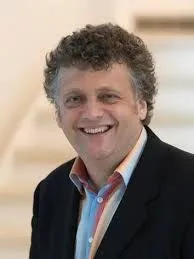
Other researchers
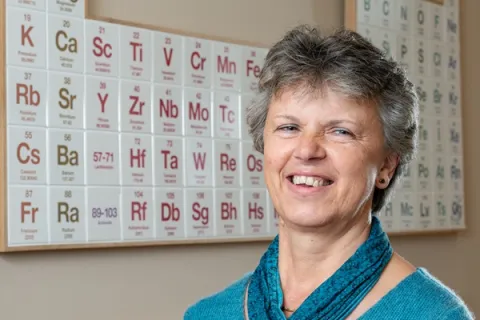
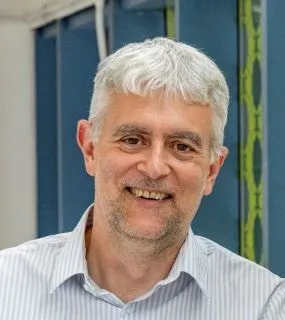
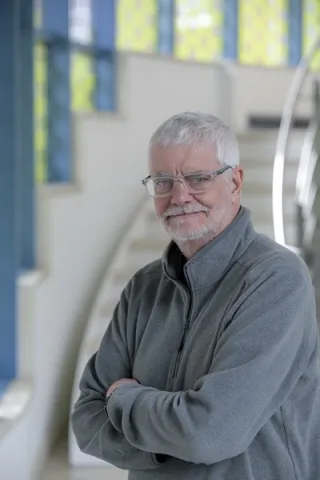
Collaborating research institutes, centres and groups
Research outputs
Joseph Spencer, John Nesbitt, Harrison Trewhitt, Reza J. Kashtiban, Gavin Bell, Victor G. Ivanov, Eric Faulques, Jeremy Sloan & David C. Smith,
2014, ACS Nano, 8(9), 9044-9052
DOI: 10.1021/nn5023632
Type: article
John M. Nesbitt & David C. Smith,
2013, Nano Letters, 13(2), 416-422
DOI: 10.1021/nl303569n
Type: article
Fei Cheng, Kathryn George, Andrew L. Hector, Marek Jura, Anna Kroner, William Levason, John Nesbitt, Gillian Reid, David C. Smith & James W. Wilson,
2011, Chemistry of Materials, 23(23), 5217-5222
DOI: 10.1021/cm202158a
Type: article
William Levason, Gillian Reid & Wenjian Zhang,
2011, Coordination Chemistry Reviews, 255(11-12), 1319-1341
Type: article
Kathryn George, Andrew L. Hector, William Levason, Gillian Reid, George Sanderson, Michael Webster & Wenjian Zhang,
2011, Dalton Transactions, 40(7), 1584-1593
DOI: 10.1039/c0dt01115k
Type: article
Andrew L. Hector, William Levason, Michael Webster, Gillian Reid & Wenjian Zhang,
2011, Dalton Transactions, 40(3), 694-700
DOI: 10.1039/c0dt00749h
Type: article
Jixin Yang, Tom Hasell, David C. Smith & Steven M. Howdle,
2009, Journal of Materials Chemistry, 19(45), 8560
DOI: 10.1039/b911224c
Type: article