

About
The underlying theme of the group is the application of rigorous mathematical models to quantitatively analyse and understand in depth problems in science and engineering. We have a wide range of mathematical expertise and techniques in modelling, from partial differential equations, to agent modelling, dynamical systems, or topological methods. Often, the research take place in close interdisciplinary collaborations. As an example, we have developed a very successful model of lithium-ion batteries by combining classical differential equation modelling with asymptotic analysis and state of the art coding to produce a software package that is both fast and comprehensive. Other examples are the application of asymptotic analysis in controlling aircraft sounds, stochastic methods in modelling gene expression and agent-based techniques in healthcare. We apply topological data analysis to model phase transitions of mesoscopic physical systems, and to enhance and up-scale optical imaging in medical applications, as precursors to efficient machine learning and data analysis.

Applicable Resurgent Asymptotics: towards a universal theory. An Isaac Newton Institute Programme
An innovative Southampton initiative, that brought together mathematicians and theoretical physicists from around the world, is helping shed light on complex challenges in mathematics and physics.
-

Disorder is Good – Taming disorder in self-assembled materials with topology
Instead of fighting disorder, we should identify structures that are ordered enough to perform the required function.
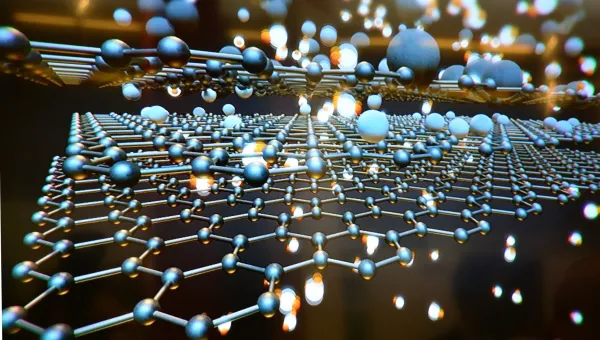
We have combined cutting edge experiments with breakthrough methods from topological data analysis to quantify emerging structure in apparently disordered nano-assemblies and classify their response to light. We aim to design a new generation of controllable nanosystems at a fraction of the cost of the current methods.
People, projects, publications and PhDs
People
-

Professor Adam Pound
Professor of Theoretical PhysicsGeneral Relativity
Sources of gravitational waves
Black holes
Accepting applications from PhD studentsEmail: A.Pound@soton.ac.ukTel: +44 23 8059 7375 -
Doctor Alexander Tyukov
Research FellowEmail: A.Tyukov@soton.ac.uk -
Mr Altay Etkin
AdS/CFT correspondence
Holographic black holes
Email: A.Etkin@soton.ac.ukTel: +44 7388 616665 -
Professor Andreas Schmitt
ProfessorQuantum chromodynamics
Accepting applications from PhD studentsEmail: A.Schmitt@soton.ac.ukTel: +44 23 8059 5114 -

Professor Benjamin Macarthur
Personal ChairMathematical modeling
Complex networks
Cell biology
Accepting applications from PhD studentsEmail: bdm@soton.ac.ukTel: +44 23 8059 5135 -

Doctor Benjamin Withers
Principal Research FellowGravity
Holography
String theory
Cosmology
Accepting applications from PhD studentsEmail: B.S.Withers@soton.ac.ukTel: +44 23 8059 3652 -

Professor Carlos Lobo
ProfessorSuperfluidity (rotational aspects, microscopics)
Accepting applications from PhD studentsEmail: C.Lobo@soton.ac.ukTel: +44 23 8059 3681 -
Doctor Carlos Mafra
Associate ProfessorCovariant quantization of the superstring
Accepting applications from PhD studentsEmail: C.R.Mafra@soton.ac.ukTel: +44 23 8059 5148 -
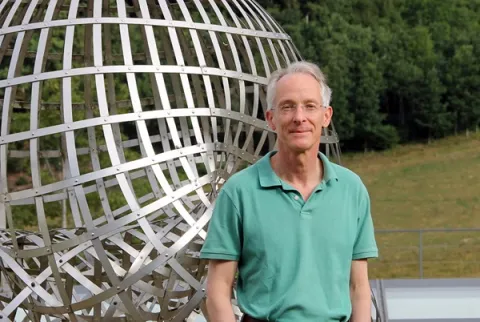
Professor Carsten Gundlach
Professor of Mathematical PhysicsClassical general relativity
Numerical relativity
Accepting applications from PhD studentsEmail: C.J.Gundlach@soton.ac.ukTel: +44 23 8059 5116 -

Professor Christopher Howls
Head of SchoolAsymptotic Analysis
Semiclassical Analysis
Applied Mathematics
Accepting applications from PhD studentsEmail: C.J.Howls@soton.ac.ukTel: +44 23 8059 5145
Mathematical modelling allows you to see the world as an interconnected whole, with causes and effects, so that we can fulfil knowledgeably our responsibility to sustain it.
Related research institutes, centres and groups
-

Applied Mathematics and Theoretical Physics
We focus on mathematical modelling and mathematical physics, and investigate everything from neutron stars to superfluids. -
Gravity
Research conducted by the Southampton Gravity group focuses on gravitational waves, general relativistic spacetimes around black holes, and the properties of ultra-dense matter in neutron stars, such as superfluidity and superconductivity of nuclear and quark matter. -
String Theory and Holography
The group works on all aspects of fundamental physics - string theory; quantum field theory; applications to gravity, black holes, cosmology, particle physics, condensed matter and quantum information.