About the project
Use a real-world restoration project as your living laboratory. This interdisciplinary PhD explores how biodiversity, communities and nature finance interact to shape resilient landscapes. Combining ecological monitoring, social research and economic analysis, you will help develop new approaches to restoration with relevance for nature recovery across the UK.
How can we restore landscapes that remain resilient not only to climate change, but also to changing communities, policies and economies?
This PhD offers the opportunity to investigate that question through a real-world living laboratory at Bunt’s Bottom on the Isle of Wight, where Woodland Instead Stewardship CIC is beginning a long-term socio-ecological restoration project that aims to restore nature while engaging people and building resilience.
You will follow restoration from its early stages, using pre-restoration biodiversity data collected in 2026 and working alongside practitioners as new habitats and interventions are developed. You will investigate three connected questions: What makes ecological restoration resilient to climate and landscape change? How can restoration deliver benefits that reflect local histories, values and needs? And how can restored landscapes remain viable as environmental policies, Biodiversity Net Gain (BNG) and nature markets evolve?
The project combines methods from ecology, geography, social science, environmental history and economics. Depending on your interests, research could include biodiversity surveys, experimental restoration, GIS and environmental monitoring, interviews, oral histories, archival research, community engagement, policy analysis and economic scenario modelling.
Crucially, you will bring these perspectives together to explore the trade-offs and synergies involved in creating resilient landscapes and help develop the concept of “Social Net Gain” alongside biodiversity gain.
Your research will contribute a new interdisciplinary framework for understanding socio-ecological restoration, using Bunt’s Bottom as an intensive case study while generating insights relevant to nature recovery and restoration projects far beyond the Isle of Wight.
Additional training or support
The project will require regular travel to the Isle of Wight, some of which can be covered by the RTSG, and by partner institutions. Most of the required training and equipment are available through the supervisory team in the School of Geography and Environmental Science, and Business School.
References
Frietsch, M., Loos, J., Löhr, K., Sieber, S. & Fischer, J. (2023). Future-proofing ecosystem restoration through enhancing adaptive capacity. Communications Biology, 6, 377.
https://doi.org/10.1038/s42003-023-04736-y
Butler, A., Groom, B. & Milner-Gulland, E.J. (2025). Local people’s preferences for housing development-associated Biodiversity Net Gain in England. Land Use Policy, 158, 107758.
https://doi.org/10.1016/j.landusepol.2025.107758
Dickie, I., Couchman, A., Beattie, A. & Jeffery, K. (2025). A Well-functioning BNG Market. Economics for the Environment Consultancy (eftec), for The Wildlife Trusts https://www.wildlifetrusts.org/sites/default/files/2025-08/Well-functioning%20BNG%20Final%20report%20eftec%20050825.pdf
Supervisors
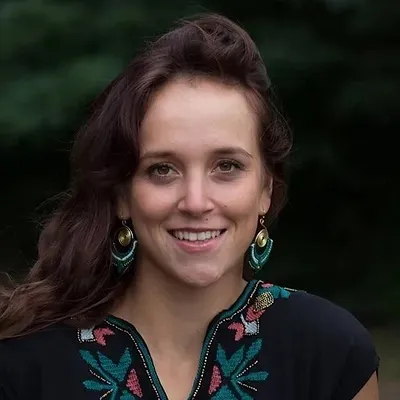
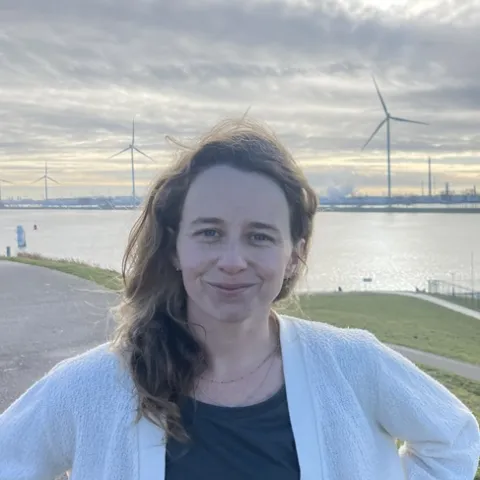
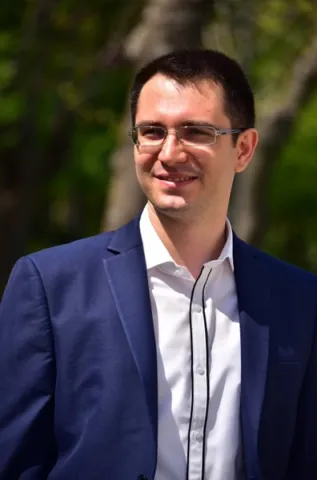
In addition to supervisors from the University of Southampton including Dr Tina Christmann (lead supervisor), Dr Sien Van der Plank, and Dr Martin Enilov, you will also be supervised by Michael Mew and Ian Boyd.