
About this course
Reimagine how we live, move and connect across public, digital and hybrid environments with our MA Environmental and Spatial Design course at Winchester School of Art (WSA).
If you are interested in shaping spaces, communities, and environments through design, this 1-year course will help you develop the skills and knowledge to work in environmental and spatial design.
Informed by ecological thinking, spatial justice and critical technologies, you'll explore:
- how people use and experience space – from their movement and behaviour, to wellbeing and accessibility
- how natural systems work, with topics such as climate, water, biodiversity and ecosystems
- how built environments are formed, including buildings, landscapes, public spaces and infrastructure
- how to design sustainably, reduce environmental impact and plan for climate change
What is environmental and spatial design?
The practice of environmental and spatial design shapes physical spaces, so that people, ecosystems and built environments work well together.
Design studios, organisations and clients increasingly seek professionals who can integrate values of sustainability, inclusivity, environmental responsibility and technological awareness into ethical and meaningful design practice.
During your environmental design degree, you'll discover how design can foster care, sustainability and belonging across scales – from intimate interiors, to urban and virtual spaces.
Whether you're revitalising existing spaces, crafting immersive experiences, or developing new forms of public engagement, you'll learn how to design with context, community and impact in mind.
Build your portfolio with WSA's state-of-the-art facilities
Working in a vibrant, studio-based environment, you'll have the opportunity to develop advanced creative and technical skills, combining conceptual and analogue material exploration with digital fluency in:
- advanced 2D/3D modelling and visualisation
- augmented, virtual and extended reality (AR/VR/XR) environments
- data visualisation
- environmental typography and simulation
- interactive installation
- client presentations
As an environmental and spatial design student, you'll have access to WSA's new facilities and makerspaces, including sophisticated digital studios with the latest computer software for modelling, visualising and digital fabrication.
Alongside advanced spatial design technologies, you'll also have access to metal, wood, ceramics and plaster workshops, as well as a professional photography laboratory.
These facilities, along with our 'research through practice' methodology, allow you to test spatial ideas through experimentation, prototyping and critical reflection.
Progress into a creative design career
Our spatial design degree prepares you for a wide range of roles across the regeneration, planning and environmental sectors.
You'll graduate as a confident designer who can respond to complex, real-world challenges with ecological awareness, social responsibility and digital innovation.
You could also progress your studies to doctoral or practice-based research level, and help innovate design, sustainability and policy. Many environmental and spatial design graduates even establish their own independent studios or consultancies within the regenerative design economy.
We regularly review our courses to ensure and improve quality. This course may be revised as a result of this. Any revision will be balanced against the requirement that the student should receive the educational service expected. Find out why, when, and how we might make changes.
Our courses are regulated in England by the Office for Students (OfS).
Course lead
This course is led by Dr Daniel Cid Moragas, Associate Professor of Design Studies. Daniel has been a lecturer at various European, American and Asian universities, as well as a previous Scientific Director at ELISAVA – working with different companies like Desigual, Arçelik, Talgo, ASCER, URBASER, Benetton Factory and Decathlon.
Visit Daniel's staff profile for more information.
MA Environmental and Spatial Design at Winchester School of Art
What makes a space feel like it belongs? At Winchester School of Art, you'll explore this question across physical and virtual environments, bringing together climate, culture, community and technology through hands-on studio practice.
From intimate interiors to urban regeneration, immersive installations to virtual environments, you’ll explore how spatial design can create more inclusive, sustainable and meaningful places. This is design with real purpose, grounded in research, experimentation and real-world challenges. (1 minute)
From intimate interiors to urban regeneration, immersive installations to virtual environments, you’ll explore how spatial design can create more inclusive, sustainable and meaningful places. This is design with real purpose, grounded in research, experimentation and real-world challenges. (1 minute)
Learn more about this subject area
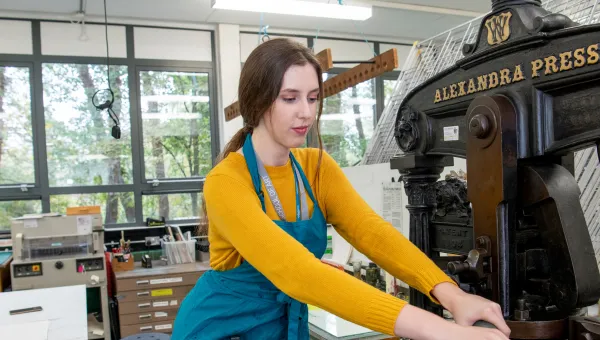

Course location
This course is based at Winchester.
Awarding body
This qualification is awarded by the University of Southampton.
Download the Course Description Document
The Course Description Document details your course overview, your course structure and how your course is taught and assessed.
Entry requirements
This course is for creative thinkers who are passionate about using design to address real-world challenges, and we encourage applicants from a wide range of backgrounds.
To apply for MA Environmental and Spatial Design, you’ll need a 2:2 degree in a relevant subject, such as:
- graphic design
- fine art
- architecture
- product design
This is not an exhaustive list of subjects, and we assess all applications on an individual basis. Prospective applicants can email our admissions team through admissions@southampton.ac.uk to discuss the suitability of their previous degree.
Your design portfolio
As part of your application, you'll need to submit a portfolio or video demonstrating your engagement with environmental and spatial design. You can find out more information about what your portfolio or video should include in the 'How to apply' section of this page.
English language requirements
If English is not your first language, you must show that you can use English to the level we require. Visit our English language pages to find out which qualifications we accept and how you can meet our requirements.
If you are taking the International English Language Testing System (IELTS), you must get at least the following scores:
IELTS score requirements
- overall score
- 6.5
- reading
- 6.0
- writing
- 6.0
- speaking
- 6.0
- listening
- 6.0
If you do not meet the English language requirements through a test or qualification, you may be able to meet them by completing one of our pre-sessional English programmes before you start your course.
Pre-masters
If you don’t meet direct entry requirements, you can apply to complete a Pre-Master's programme through our partnership with OnCampus.
You'll progress to your chosen course after successfully completing the programme. Find out more about Pre-Master's programmes for international students.
Recognition of professional experience
If you don't have the exact entry requirements, but you have significant work experience in this sector we’ll assess your relevant professional experience, your subject knowledge and your aptitude for learning.
Your application will be considered on individual merit and you may be asked to attend an interview.
Got a question?
Please contact us if you're not sure you have the right experience or qualifications to get onto this course.
Email: enquiries@southampton.ac.uk
Tel: +44(0)23 8059 5000
Course structure
On our MA Environmental and Spatial Design course, you'll develop your practice through studio-led projects, research and external briefs.
You’ll explore spatial storytelling, ecological and policy contexts, and research methods. You'll also use site observation, mapping, modelling and prototyping to investigate design ideas.
Once you've developed your research and design skills, you'll apply them to external and studio projects. This includes working in real-world contexts and developing responses through experimentation, prototyping and critical reflection.
Finally, you'll complete an independent final project that allows you to develop and communicate your own spatial design ideas.
Want more detail? See all the modules in the course.
Modules
The modules outlined provide examples of what you can expect to learn on this degree course based on recent academic teaching. As a research-led University, we undertake a continuous review of our course to ensure quality enhancement and to manage our resources. The precise modules available to you in future years may vary depending on staff availability and research interests, new topics of study, timetabling and student demand. Find out why, when and how we might make changes.
For entry in academic year 2027 to 2028
Year 1 modules
You must study the following modules :
Design Projects: Investigate, Imagine & Intervene
This studio module introduces Environmental and Spatial Design as a critical, responsive, and creative practice. Working across physical, interior, and spatial contexts, students engage with urgent real-world challenges through a structured sequence of de...
Design Research and Impact Methods
This module equips you with core design research and evaluations tools. You will explore a range of design-research methods—visual, spatial, participatory, and digital—and learn how to frame research questions, apply research ethics, justify your approach...
Ecologies and Policies of Space
In this module, you will learn how to critically examine the political and ecological implications of how space is produced, governed, and experienced. You will research key theoretical and systemic frameworks of political ecology and spatial justice to e...
External Projects: Engage, Negotiate & Resolve
This module focuses on producing impactful, contextually responsive spatial design outcomes that contribute to meaningful change. Building on the foundations established in Semester 1’s Design Projects: Investigate, Imagine, Intervene, you will extend you...
Final Project
The Final Project provides the opportunity to undertake a substantial spatial design project that synthesises the knowledge, skills, and critical perspectives developed across your studies.
You will build on and implement the research plan develo...
Spatial Storytelling
This practical, skills‑focused module invites you to explore, challenge and test the tools and methods used by contemporary Spatial Designers. Through hands‑on experimentation with technologies such as VR, AR, physical prototyping and digital modelling, y...
You must also choose from the following modules :
Creative Thinking and Problem Solving
The module been designed for the purpose of promoting and developing creative thinking and problem solving (CTPS) skills and addresses the need for individuals and teams who can ‘think outside the box’, and apply fresh thinking to practical, ‘real world’ ...
Digital Cultures
Digital Cultures is an elective module covering a broad range of topics relating to the encounter with digital environments, audiovisual content and the aesthetics and politics of media technologies in historical and contemporary contexts. This module int...
Entrepreneurship
The module enables you to recognise entrepreneurial traits and behaviours and apply elements of these to the real world.
With a strong orientation towards the future, realised through forecasting in both finance and marketing, the module will provide ...
Experimental Publishing
The consideration of what publishing actual means today remains a relevant question for any creative practitioner. Over the past few years we have seen a huge rise in self-publishing, print on-demand services, tweeting and social media, from post-digital ...
Exploring the Visual Language of Display
The module provides thematic examples of the theories and practices of visual presentation and display explored through interdisciplinary and critical contexts appropriate to the MA pathways. It offers a number of critical “tools”, enhanced through refere...
Global Marketing
The module seeks to advance your knowledge on key issues of globalization and changes to marketing approaches that have taken place due to internationalisation.. The module situates the concepts and terminology of global marketing in a range of different ...
Sustainability in Business and Design
This module addresses critical perspectives in relation to sustainability and its impact in art, design and the creative industries. The module seeks to inform your thinking in relation to sustainability issues, be they environmental, social or economic, ...
Visual Culture
We live in a world that is saturated by images, from the far reaches of space to the sub-atomic level and just about everything in between. Images seem to have a special power in our lives, playing a part in the constructions of who and what we are and t...
Learning and assessment
Learning
The distinctive learning experience we offer at WSA reflects professional spatial design practice – blending conceptual thinking, technical skill, and collaborative project work.
Research-led and embedded in active staff research, our studio teaching fosters a culture of peer learning, inclusivity and collaboration which will enable you to take intellectual and creative risks in a supportive environment.
Projects are often situated in live contexts – using Winchester, its surroundings and other urban settings as laboratories for exploring spatial equity, regeneration and the dynamics of place. On these projects, you'll work with students from other disciplines and external partners such as local authorities, cultural organisations or community groups.
You'll also learn through a blend of:
- lectures and keynote talks on key theories, debates and case studies
- practical and technical skills workshops
- seminars and discussions to encourage critical and creative thinking
- regular one-to-one or small group tutorials and critiques
- independent research and practice
During the course, you'll have opportunities to build your portfolio, collaborate on projects, and engage directly with professional networks through WSA Exchange, the school’s enterprise and external engagement unit.
You'll also benefit from WSA's Talent Exchange portal, which connects graduating students with employers nationally and internationally.
Assessment
You'll be assessed through a combination of formative and summative assessment methods that allow you to develop and demonstrate your creative, analytical and professional skills.
Formative assessment is not graded and provides ongoing feedback through verbal and written comments, peer review and self-evaluation. This helps you reflect critically on your work and develop your ideas before final submission.
Summative assessment is graded and allows you to demonstrate that you've met the learning outcomes for your modules and the course.
Your assessments may include:
- design research and development, including research reports, site analysis, mapping studies and design briefs
- portfolios of spatial projects, including drawings, renders, models, digital prototypes and documentation of your process
- reflective journals and blogs
- individual and group presentations, including professional critiques and peer review
- spatial prototypes and material explorations, using digital and analogue fabrication methods
- information visualisations and mapping outputs
- written and visual essays or publications
- documentation of live projects with external partners
- your final major project, supported by a written critical reflection
- a professional conversation accompanying your final major project
Through these assessments, you'll demonstrate your ability to research, conceptualise, develop and present spatial projects to a professional standard, while considering their ethical, social and environmental implications.
Academic Support
We take a flexible and inclusive approach to learning and teaching through varied formats, accessible resources and multiple submission modes, and we can provide reasonable adjustments where required.
You'll be assigned a personal academic tutor, who will offer one-to-one advice throughout your time at Southampton. They will also support you in your studies or with any other issues you have.
You'll also have access to The Student Hub, your main point of contact for support at Southampton. The Student Hub offers 24/7 wellbeing support, as well as help with disability, fees, finance, accommodation and course administration.
Careers and employability
The employability and enterprise skills you'll gain from this course are reflected in the Southampton skills model. When you join us you'll be able to use our skills model to track, plan, and benefit your career development and progress.
Download skills overview

Work experience opportunities
Choosing to do work experience is a great way to enhance your employability, build valuable networks, and evidence your potential. Learn about the different work and industry experience options at Southampton.
Careers services and support
We are a top 20 UK university for employability (QS Graduate Employability Rankings 2022). Our Careers, Employability and Student Enterprise team will support you. This support includes:
- work experience schemes
- CV and interview skills and workshops
- networking events
- careers fairs attended by top employers
- a wealth of volunteering opportunities
- study abroad and summer school opportunities
We have a vibrant entrepreneurship culture and our dedicated start-up supporter, Futureworlds, is open to every student.
Your career ideas and graduate job opportunities may change while you're at university. So it is important to take time to regularly reflect on your goals, speak to people in industry and seek advice and up-to-date information from Careers, Employability and Student Enterprise professionals at the University.
Fees, costs and funding
Tuition fees
Fees for a year's study:
- UK students pay £17,000.
- EU and international students pay £32,000.
Deposit
If you're an international student on a full-time course, we'll ask you to pay £2,000 of your tuition fees in advance, as a deposit.
Your offer letter will tell you when this should be paid and provide full terms and conditions.
Find out about exemptions, refunds and how to pay your deposit on our tuition fees for overseas students page.
What your fees pay for
Your tuition fee covers the full cost of tuition and any exams. The fee you pay will remain the same each year from when you start studying this course. This includes if you suspend and return.
Find out how to pay your tuition fees.
Accommodation and living costs, such as travel and food, are not included in your tuition fees. There may also be extra costs for retake and professional exams.
Explore:
10% alumni discount
If you’re a graduate of the University of Southampton, you could be eligible for a 10% discount on your postgraduate tuition fees.
Postgraduate Master’s Loans (UK nationals only)
This can help with course fees and living costs while you study a postgraduate master's course.
If you study part-time, you may not be eligible for this loan. Find out if you're eligible.
Dean of Faculty of Arts and Humanities Global Talent Award
Up to 5 scholarships of £10,000 are available to first year international students starting an eligible full-time, on-campus, 1-year postgraduate taught programme in the Faculty of Arts and Humanities.
Learn more about eligibility criteria and conditions for the Dean of Faculty of Arts and Humanities Global Talent Award.
Winchester School of Art Inclusive Futures Scholarship
This scholarship supports talented students who face financial, social, or structural barriers to postgraduate study, helping ease financial pressure so they can focus on their creative work and bring diverse perspectives to our community.
Successful applicants will have 50% of their tuition fees paid for the duration of their course.
Learn more about the Winchester School of Art Inclusive Futures Scholarship and how to apply.
Other postgraduate funding options
A variety of additional funding options may be available to help you pay for your master’s study. Both from the University and other organisations.
Funding for EU and international students
Find out about funding you could get as an international student.
How to apply
- Use the blue 'apply for this course' button on this page to take you to our postgraduate admissions system.
- Create an account which gives you access to your own application portal.
- Search for the course you want to apply for.
- Complete the application form and upload any supporting documents.
- Submit your application.
For further details of our admission process, read our step by step guide to postgraduate taught applications.
Application deadlines
UK Students
The deadline to apply for this course is Wednesday 18 August 2027, midday UK time.
We advise applying early as applications may close before the expected deadline if places are filled.
International students
The deadline to apply for this course is Wednesday 4 August 2027, midday UK time.
We advise applying early as applications may close before the expected deadline if places are filled.
Application assessment fee
There is no application assessment fee for postgraduate courses starting in 2027.
Supporting information
When you apply you’ll need to submit a personal statement explaining why you want to take the course, and a portfolio or video demonstrating your engagement with environmental and spatial design.
Personal statement
Your personal statement should include information about:
- your knowledge of the subject area
- why you want to study a postgraduate qualification in this course
- how you intend to use your qualification
Portfolio
Your portfolio or video should demonstrate:
- an imaginative and exploratory approach to addressing challenges
- how you develop, test and communicate ideas
- a range of creative and practical skills, such as drawing, visual communication, making, digital processes, experimentation, or working with materials and media
- an interest in people, places, experiences, systems, or environments, demonstrated through projects, research, creative practice, or real-world applications
Other supporting information
You'll also need to submit two academic references.
Please include the required paperwork showing your first degree and your IELTS English language test score (if you are a non-native English speaker) with your application. Without these, your application may be delayed.
What happens after you apply
You'll be able to track your application through our online Applicant Record System.
We will aim to send you a decision 6 weeks after you have submitted your application.
Unfortunately, due to number of applications we receive, we may not be able to give you specific feedback on your application if you are unsuccessful.
Equality and diversity
We treat and select everyone in line with our Inclusion and Respectful Behaviour Policy.
Got a question?
Please contact us if you're not sure you have the right experience or qualifications to get onto this course.
Email: enquiries@southampton.ac.uk
Tel: +44(0)23 8059 5000
Related courses
Environmental and Spatial Design (MA) is a course in the
Art, design and fashion
subject area.
Here are some other courses within
this subject area:
MA
Arts and Cultural Leadership
MA
Communication Design
MA
Contemporary Curating
MSc
Creative Technologies
MA
Design Innovation and Technology
MSc
Design Innovation and Technology
MA
Design Management
MA
Digital Media
MSc
E-textiles and Wearable Technologies
MA
Fashion Design
MA
Fashion Management
MA
Fashion Marketing and Branding
-
Study
- View all courses
- Taught postgraduate study
- Pre-sessional English courses
-
Subjects
- Acoustical engineering
- Aeronautical and astronautical engineering
- Ageing and gerontology
- Archaeology
- Art, design and fashion
- Audiology
- Biological sciences
- Biomedical and medical engineering
- Business, accounting, finance and marketing
- Chemistry
- Civil engineering
- Computer science and software engineering
- Economics
- Education
- Electrical and electronic engineering
- English
- Film studies
- French
- Geography and environmental science
- History
- Languages and linguistics
- Law
- Maritime engineering
- Mathematical sciences
- Mechanical engineering
- Medicine
- Music
- Nursing, midwifery and healthcare
- Ocean and Earth science
- Philosophy
- Photonics and optoelectronics
- Physics and astronomy
- Politics and international relations
- Psychology
- Social statistics and demography
- Sociology, social policy and criminology
-
PhDs and research degrees
- Create your own research project
-
Find a PhD project
- A missing link between continental shelves and the deep sea: Have we underestimated the importance of land-detached canyons?
- A study of rolling contact fatigue in electric vehicles (EVs)
- Acoustic monitoring of forest exploitation to establish community perspectives of sustainable hunting
- Acoustic sensing and characterisation of soil organic matter
- Advancing intersectional geographies of diaspora-led development in times of multiple crises
- Aero engine fan wake turbulence – Simulation and wind tunnel experiments
- Against Climate Change (DACC): improving the estimates of forest fire smoke emissions
- All-in-one Mars in-situ resource utilisation (ISRU) system and life-supporting using non-thermal plasma
- An electromagnetic study of the continent-ocean transition southwest of the UK
- An investigation of the relationship between health, home and law in the context of poor and precarious housing, and complex and advanced illness
- Antibiotic resistance genes in chalk streams
- Being autistic in care: Understanding differences in care experiences including breakdowns in placements for autistic and non-autistic children
- Biogeochemical cycling in the critical coastal zone: Developing novel methods to make reliable measurements of geochemical fluxes in permeable sediments
- Bloom and bust: seasonal cycles of phytoplankton and carbon flux
- British Black Lives Matter: The emergence of a modern civil rights movement
- Building physics for low carbon comfort using artificial intelligence
- Business studies and management: accounting
- Business studies and management: banking and finance
- Business studies and management: decision analytics and risk
- Business studies and management: digital and data driven marketing
- Business studies and management: human resources (HR) management and organisational behaviour
- Business studies and management: strategy, innovation and entrepreneurship
- Carbon storage in reactive rock systems: determining the coupling of geo-chemo-mechanical processes in reactive transport
- Cascading hazards from the largest volcanic eruption in over a century: What happened when Hunga Tonga-Hunga Ha’apai erupted in January 2022?
- Characterisation of cast austenitic stainless steels using ultrasonic backscatter and artificial intelligence
- Climate Change effects on the developmental physiology of the small-spotted catshark
- Climate at the time of the Human settlement of the Eastern Pacific
- Collaborative privacy in data marketplaces
- Compatibility of climate and biodiversity targets under future land use change
- Cost of living in modern and fossil animals
- Creative clusters in rural, coastal and post-industrial towns
- Deep oceanic convection: the outsized role of small-scale processes
- Defect categories and their realisation in supersymmetric gauge theory
- Defining the Marine Fisheries-Energy-Environment Nexus: Learning from shocks to enhance natural resource resilience
- Design and fabrication of next generation optical fibres
- Developing a practical application of unmanned aerial vehicle technologies for conservation research and monitoring of endangered wildlife
- Development and evolution of animal biomineral skeletons
- Development of all-in-one in-situ resource utilisation system for crewed Mars exploration missions
- Ecological role of offshore artificial structures
- Effect of embankment and subgrade weathering on railway track performance
- Efficient ‘whole-life’ anchoring systems for offshore floating renewables
- Electrochemical sensing of the sea surface microlayer
- Engagement with nature among children from minority ethnic backgrounds
- Enhancing UAV manoeuvres and control using distributed sensor arrays
- Ensuring the Safety and Security of Autonomous Cyber-Physical Systems
- Environmental and genetic determinants of Brassica crop damage by the agricultural pest Diamondback moth
- Estimating marine mammal abundance and distribution from passive acoustic and biotelemetry data
- Evolution of symbiosis in a warmer world
- Examining evolutionary loss of calcification in coccolithophores
- Explainable AI (XAI) for health
- Explaining process, pattern and dynamics of marine predator hotspots in the Southern Ocean
- Exploring dynamics of natural capital in coastal barrier systems
- Exploring the mechanisms of microplastics incorporation and their influence on the functioning of coral holobionts
- Exploring the potential electrical activity of gut for healthcare and wellbeing
- Exploring the trans-local nature of cultural scene
- Facilitating forest restoration sustainability of tropical swidden agriculture
- Faulting, fluids and geohazards within subduction zone forearcs
- Faulting, magmatism and fluid flow during volcanic rifting in East Africa
- Fingerprinting environmental releases from nuclear facilities
- Flexible hybrid thermoelectric materials for wearable energy harvesting
- Floating hydrokinetic power converter
- Glacial sedimentology associated subglacial hydrology
- Green and sustainable Internet of Things
- How do antimicrobial peptides alter T cell cytokine production?
- How do calcifying marine organisms grow? Determining the role of non-classical precipitation processes in biogenic marine calcite formation
- How do neutrophils alter T cell metabolism?
- How well can we predict future changes in biodiversity using machine learning?
- Hydrant dynamics for acoustic leak detection in water pipes
- If ‘Black Lives Matter’, do ‘Asian Lives Matter’ too? Impact trajectories of organisation activism on wellbeing of ethnic minority communities
- Illuminating luciferin bioluminescence in dinoflagellates
- Imaging quantum materials with an XFEL
- Impact of neuromodulating drugs on gut microbiome homeostasis
- Impact of pharmaceuticals in the marine environment in a changing world
- Improving subsea navigation using environment observations for long term autonomy
- Information theoretic methods for sensor management
- Installation effect on the noise of small high speed fans
- Integrated earth observation mapping change land sea
- Interconnections of past greenhouse climates
- Investigating IgG cell depletion mechanisms
- Is ocean mixing upside down? How mixing processes drive upwelling in a deep-ocean basin
- Landing gear aerodynamics and aeroacoustics
- Lightweight gas storage: real-world strategies for the hydrogen economy
- Machine learning for multi-robot perception
- Machine learning for multi-robot perception
- Marine ecosystem responses to past climate change and its oceanographic impacts
- Mechanical effects in the surf zone - in situ electrochemical sensing
- Microfluidic cell isolation systems for sepsis
- Migrant entrepreneurship, gender and generation: context and family dynamics in small town Britain
- Miniaturisation in fishes: evolutionary and ecological perspectives
- Modelling high-power fibre laser and amplifier stability
- Modelling the evolution of adaptive responses to climate change across spatial landscapes
- Nanomaterials sensors for biomedicine and/or the environment
- New high-resolution observations of ocean surface current and winds from innovative airborne and satellite measurements
- New perspectives on ocean photosynthesis
- Novel methods of detecting carbon cycling pathways in lakes and their impact on ecosystem change
- Novel technologies for cyber-physical security
- Novel transparent conducting films with unusual optoelectronic properties
- Novel wavelength fibre lasers for industrial applications
- Ocean circulation and the Southern Ocean carbon sink
- Ocean influence on recent climate extremes
- Ocean methane sensing using novel surface plasmon resonance technology
- Ocean physics and ecology: can robots disentangle the mix?
- Ocean-based Carbon Dioxide Removal: Assessing the utility of coastal enhanced weathering
- Offshore renewable energy (ORE) foundations on rock seabeds: advancing design through analogue testing and modelling
- Optical fibre sensing for acoustic leak detection in buried pipelines
- Optimal energy transfer in nonlinear systems
- Optimal energy transfer in nonlinear systems
- Optimizing machine learning for embedded systems
- Oxidation of fossil organic matter as a source of atmospheric CO2
- Partnership dissolution and re-formation in later life among individuals from minority ethnic communities in the UK
- Personalized multimodal human-robot interactions
- Preventing disease by enhancing the cleaning power of domestic water taps using sound
- Quantifying riparian vegetation dynamics and flow interactions for Nature Based Solutions using novel environmental sensing techniques
- Quantifying the response and sensitivity of tropical forest carbon sinks to various drivers
- Quantifying variability in phytoplankton electron requirements for carbon fixation
- Resilient and sustainable steel-framed building structures
- Resolving Antarctic meltwater events in Southern Ocean marine sediments and exploring their significance using climate models
- Robust acoustic leak detection in water pipes using contact sound guides
- Silicon synapses for artificial intelligence hardware
- Smart photon delivery via reconfigurable optical fibres
- The Gulf Stream control of the North Atlantic carbon sink
- The Mayflower Studentship: a prestigious fully funded PhD studentship in bioscience
- The calming effect of group living in social fishes
- The duration of ridge flank hydrothermal exchange and its role in global biogeochemical cycles
- The evolution of symmetry in echinoderms
- The impact of early life stress on neuronal enhancer function
- The oceanic fingerprints on changing monsoons over South and Southeast Asia
- The role of iron in nitrogen fixation and photosynthesis in changing polar oceans
- The role of singlet oxygen signaling in plant responses to heat and drought stress
- Time variability on turbulent mixing of heat around melting ice in the West Antarctic
- Triggers and Feedbacks of Climate Tipping Points
- Uncovering the drivers of non-alcoholic fatty liver disease progression using patient derived organoids
- Understanding recent land-use change in Snowdonia to plan a sustainable future for uplands: integrating palaeoecology and conservation practice
- Understanding the role of cell motility in resource acquisition by marine phytoplankton
- Understanding the structure and engagement of personal networks that support older people with complex care needs in marginalised communities and their ability to adapt to increasingly ‘digitalised’ health and social care
- Unpicking the Anthropocene in the Hawaiian Archipelago
- Unraveling oceanic multi-element cycles using single cell ionomics
- Unravelling southwest Indian Ocean biological productivity and physics: a machine learning approach
- Using acoustics to monitor how small cracks develop into bursts in pipelines
- Using machine learning to improve predictions of ocean carbon storage by marine life
- Vulnerability of low-lying coastal transportation networks to natural hazards
- X-ray imaging and property characterisation of porous materials
- Funding your research degree
- How to apply for a PhD or research degree
- How to make a PhD enquiry
- Support while studying your PhD or research degree
- Exchanges and studying abroad
- Undergraduate study
- Tuition fees, funding and scholarships
- Short courses
- Lunchtime evening and weekend courses
- Clearing
- Summer schools
- Get a prospectus
- Student life
-
Research
- Our impact
- Research projects
- Research areas
- Research facilities
- Collaborate with us
-
Institutes, centres and groups
- Active Living
- Advanced Fibre Applications
- Advanced Laser Laboratory
- Advanced Project Management Research Centre
- Antibody and Vaccine Group
- Astronomy Group
- Autism Community Research Network @ Southampton (ACoRNS)
- Bioarchaeology and Osteoarchaeology at Southampton (BOS)
- Bladder and Bowel Management
- Cell and Developmental Biology
- Centre for Defence and Security Research
- Centre for Developmental Origins of Health and Disease
- Centre for Digital Finance
- Centre for Eastern European and Eurasian Studies (CEEES)
- Centre for Empirical Research in Finance and Banking (CERFIB)
- Centre for Experimental Fluid Mechanics
- Centre for Geometry, Topology, and Applications
- Centre for Global Health and Policy (GHaP)
- Centre for Green Maritime Innovation (cGMI)
- Centre for Health Technologies
- Centre for Healthcare Analytics
- Centre for Human Development, Stem Cells and Regeneration
- Centre for Imperial and Postcolonial Studies
- Centre for Inclusive and Sustainable Entrepreneurship and Innovation (CISEI)
- Centre for International Film Research (CIFR)
- Centre for International Law and Globalisation
- Centre for Internet of Things and Pervasive Systems
- Centre for Justice Studies
- Centre for Linguistics, Language Education and Acquisition Research
- Centre for Maritime Archaeology
- Centre for Medieval and Renaissance Culture (CMRC)
- Centre for Political Ethnography (CPE)
- Centre for Research in Accounting, Accountability and Governance
- Centre for Research on Work and Organisations
- Centre for Resilient Socio-Technical Systems
- Centre for Transnational Studies
- Child and Adolescent Research Group
- Clinical Ethics, Law and Society (CELS)
- Clinical Legal Education
- Computational Nonlinear Optics
- Cyber Security Academy
- Digital Oceans
- EPSRC and MOD Centre for Doctoral Training in Complex Integrated Systems for Defence and Security
- Economic Theory and Experimental Economics
- Economy, Society and Governance
- Electrical Power Engineering
- Environmental Hydraulics
- Gas Photonics in Hollow Core Fibres
- Geochemistry
- Global Health (Demography)
- Global Health Community of Practice
- Gravity group
- High Power Fibre Lasers
- Hollow Core Fibre
- Human Genetics and Genomic Medicine
- Infection
- Infrastructure Group
- Institute of Developmental Sciences
- Institute of Maritime Law (IML)
- Integrated Photonic Devices
- Interdisciplinary Musculoskeletal Health
- International Centre for Ecohydraulics Research (ICER)
- Language Assessment and Testing Unit (LATU)
- Laser-Direct-Write (LDW) Technologies for Biomedical Applications
- Law and Technology Centre
- Long Term Conditions
- Magnetic Resonance
- Mathematical Modelling
- Medicines Management
- Molecular and Precision Biosciences
- Multiwavelength Accretion and Astronomical Transients
- National Biofilms Innovation Centre (NBIC)
- National Centre for Research Methods
- National Infrastructure Laboratory
- Nature-Based Ocean Solutions
- Nonlinear Semiconductor Photonics
- Ocean Perception Group
- Operational Research
- Optical Engineering and Quantum Photonics Group
- Paediatrics and Child Health - Clinical and Experimental Sciences
- People, Property, Community
- Photonic Systems, Circuits and Sensors Group
- Physical Optics
- Primary Care Research Centre
- Quantum, Light and Matter Group
- Silica Fibre Fabrication
- Silicon Photonics
- Skin Sensing Research Group
- Southampton Ethics Centre
- Southampton Health Technology Assessments Centre (SHTAC)
- Southampton High Energy Physics group
- Southampton Imaging
- Southampton Theory Astrophysics and Gravity (STAG) Research Centre
- Stefan Cross Centre for Women, Equality and Law
- String theory and holography
- The India Centre for Inclusive Growth and Sustainable Development
- The Parkes Institute
- Tony Davies High Voltage Laboratory
- Ultrafast X-ray Group
- Vision Science
- WSA Exchange
- Work Futures Research Centre (WFRC)
- Support for researchers
- Faculties, schools and departments
- Interdisciplinary research
- Find people and expertise
- Research Search | Research projects
- Research jobs
- Business
- Global
- About
- Visit
- Alumni
- Departments
- News
- Events
- Contact