

About
The underlying theme of the group is the application of rigorous mathematical models to quantitatively analyse and understand in depth problems in science and engineering. We have a wide range of mathematical expertise and techniques in modelling, from partial differential equations, to agent modelling, dynamical systems, or topological methods. Often, the research take place in close interdisciplinary collaborations. As an example, we have developed a very successful model of lithium-ion batteries by combining classical differential equation modelling with asymptotic analysis and state of the art coding to produce a software package that is both fast and comprehensive. Other examples are the application of asymptotic analysis in controlling aircraft sounds, stochastic methods in modelling gene expression and agent-based techniques in healthcare. We apply topological data analysis to model phase transitions of mesoscopic physical systems, and to enhance and up-scale optical imaging in medical applications, as precursors to efficient machine learning and data analysis.

Applicable Resurgent Asymptotics: towards a universal theory. An Isaac Newton Institute Programme
An innovative Southampton initiative, that brought together mathematicians and theoretical physicists from around the world, is helping shed light on complex challenges in mathematics and physics.
-

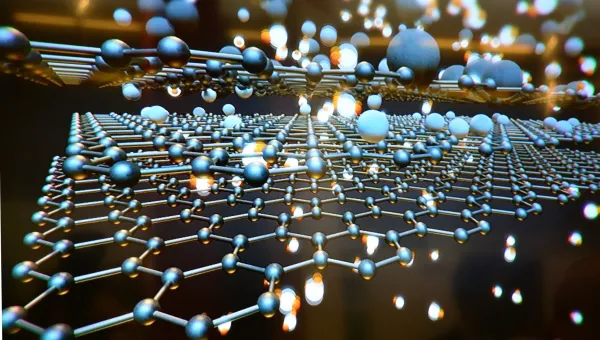
Disorder is Good – Taming disorder in self-assembled materials with topology
Instead of fighting disorder, we should identify structures that are ordered enough to perform the required function.
We have combined cutting edge experiments with breakthrough methods from topological data analysis to quantify emerging structure in apparently disordered nano-assemblies and classify their response to light. We aim to design a new generation of controllable nanosystems at a fraction of the cost of the current methods.
People, projects, publications and PhDs
People
-

Mr Daniel Baig
Gauge/Gravity Duality
Supergravity
Holography
Email: D.P.Baig@soton.ac.uk -
Professor David Gammack
Associate Dean (Education)Email: D.Gammack@soton.ac.ukTel: +44 23 8059 2913 -
Doctor David Turton
Principal Research FellowString theory
Black holes
Holography
Accepting applications from PhD studentsEmail: D.J.Turton@soton.ac.ukTel: +44 23 8059 5142 -
Miss Elisa Marieni
Supersymmetric Gauge Theories
String Theory
Email: E.I.Marieni@soton.ac.uk -
Doctor Felix Haehl
Principal Research Fellow (UKRI/ERC Frontier)AdS/CFT duality
Black holes in quantum gravity
Conformal field theory
Accepting applications from PhD studentsEmail: F.M.Haehl@soton.ac.ukTel: +44 2380597493 -
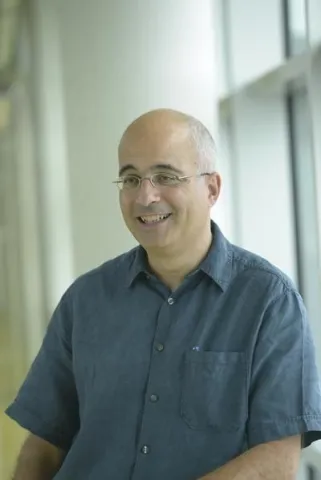
Emeritus Professor Giampaolo D'Alessandro
Liquid crystals
Optics
Mathematical modelling
Email: dales@soton.ac.ukTel: +44 23 8059 3650 -

Professor Giles Richardson
ProfessorModelling renewable energy storage and generation
Modelling in biomedicine
Accepting applications from PhD studentsEmail: G.Richardson@soton.ac.ukTel: +44 23 8059 3659 -

Doctor Gregory Ashton
Associate ProfessorGravitational-waves
Black holes
Neutron starsAccepting applications from PhD studentsEmail: G.Ashton@soton.ac.uk -
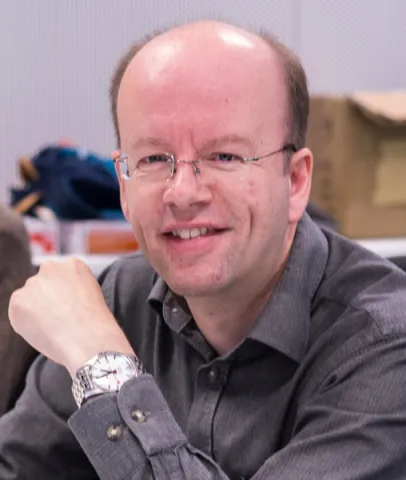
Professor Ian Hawke
ProfessorNumerical relativity
Neutron Stars
Gravitational waves
Accepting applications from PhD studentsEmail: I.Hawke@soton.ac.ukTel: +44 23 8059 8993
Mathematical modelling allows you to see the world as an interconnected whole, with causes and effects, so that we can fulfil knowledgeably our responsibility to sustain it.
Related research institutes, centres and groups
-

Applied Mathematics and Theoretical Physics
We focus on mathematical modelling and mathematical physics, and investigate everything from neutron stars to superfluids. -
Gravity
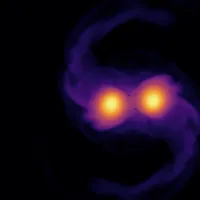
Research conducted by the Southampton Gravity group focuses on gravitational waves, general relativistic spacetimes around black holes, and the properties of ultra-dense matter in neutron stars, such as superfluidity and superconductivity of nuclear and quark matter. -
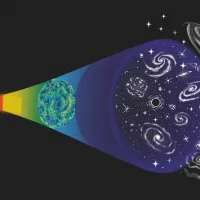
String Theory and Holography
The group works on all aspects of fundamental physics - string theory; quantum field theory; applications to gravity, black holes, cosmology, particle physics, condensed matter and quantum information.