Project overview
Celebrated annually on 1 and 2 November, Día de Muertos (Day of the Dead) is a vibrant and deeply meaningful tradition rooted in both Catholic and Aztec beliefs. While it originated in Mexico, it is now embraced by communities across the globe, including in the USA, the UK, and beyond.
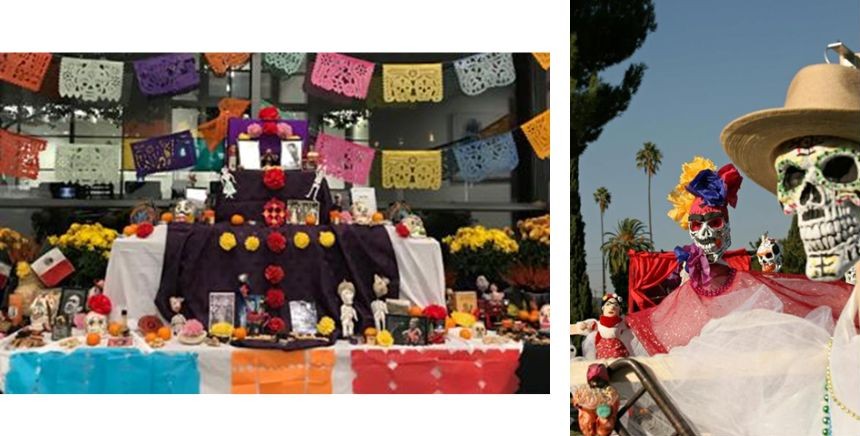
The celebration is marked by joyful remembrance, as families honor the lives of departed loved ones through colorful and heartfelt rituals. Altars (ofrendas) are adorned with candles, marigolds, photos, and favorite foods of the deceased.
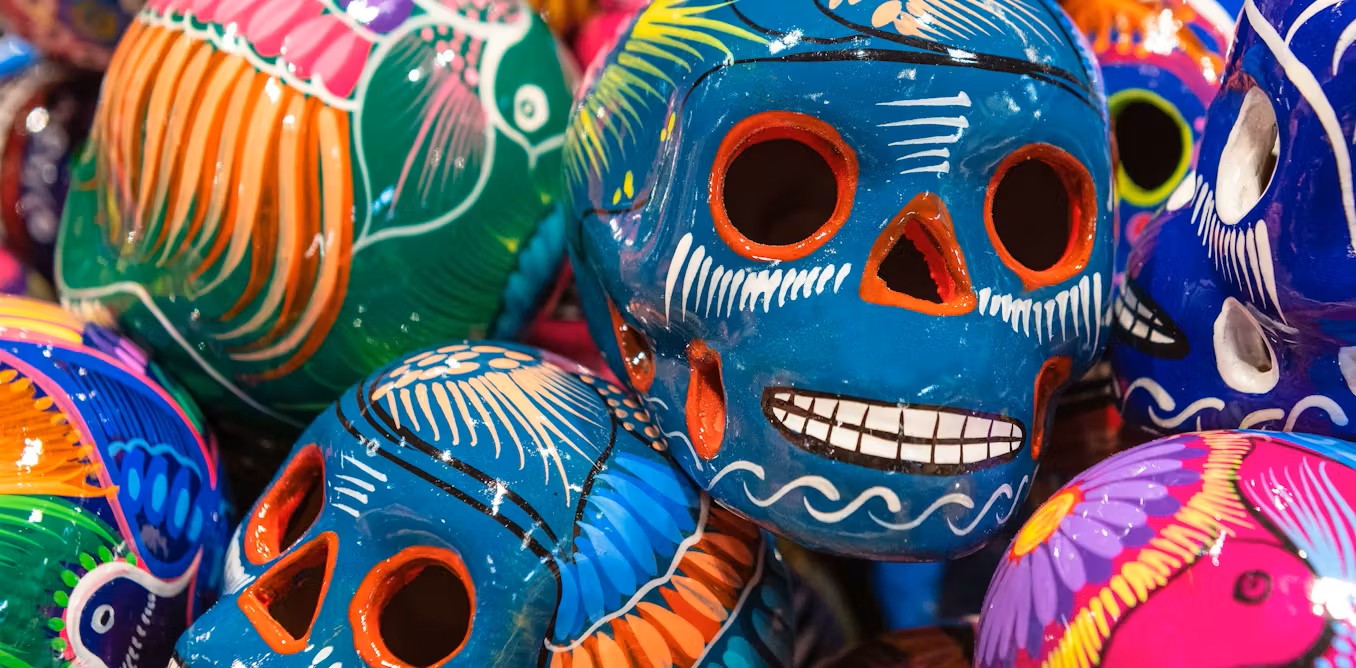
Tombs are lovingly decorated, and street events —featuring music, dance, and symbolic imagery like sugar skulls—bring communities together in a spirit of love and respect.
A Research Project to Inspire Schools: Why is it important to teach the practice in schools in the UK?
The decline in GCSE language uptake in the UK is well documented, with modern foreign languages no longer compulsory in many schools. While arts-based engagement with Día de Muertos may not reverse this trend alone, it offers a powerful tool to inspire interest in language learning through creative and intercultural exploration.
Currently, the Spanish MFL curriculum tends to focus on Iberian topics, with Latin American content often treated superficially. Día de Muertos is taught in some British schools—particularly in MFL, Art, Design, and Photography departments—but provision remains inconsistent.
In Mexico and North America, Día de Muertos is widely celebrated in schools, reflecting the size and cultural influence of the Mexican-American diaspora. In the UK, the Mexican community is also vibrant and active, and many families continue to celebrate the tradition.
These school-based initiatives aim to promote interculturality, respectful cultural exchange, and community collaboration, particularly by inviting local Mexican artists and families to participate in educational activities.
CPD Training and Toolkit of Resources
To address gaps in cultural understanding and curriculum delivery, Dr Jane Lavery has developed innovative, research-led resources for UK secondary schools. Her work presents accessible materials for teachers and pupils in Years 7–13, particularly those studying Spanish, but also in subjects such as Art, Religious Studies, and Citizenship. These resources explore themes including Día de Muertos, interculturality, cultural appropriation, commemoration, and identity, showing how the tradition resonates with diverse communities.
Lavery also offers CPD and PGCE training opportunities for primary and secondary school teachers and trainees across the UK and the Republic of Ireland. These sessions provide cross-curricular, classroom-based activities centered on Día de Muertos and its broader cultural significance. For details on upcoming online and in-person sessions, educators can email mloutreach@soton.ac.uk.
Previous CPD sessions—delivered in collaboration with the University of Southampton, the Langton Language Consortium, and the Spanish Embassy’s Education Office (Consejería de Educación Española)—have received excellent feedback.
In 2025, the participants awarded excellent ratings of 4.87/5. The July session received 4.44 out of 5.
See testimonials from teachers and pupils
Upcoming CPD/PGCE Training: Día de Muertos and Intercultural Education
Dr Jane Lavery invites teachers from Modern Foreign Languages (MFL) and other departments to participate in her upcoming online CPD/PGCE training session in July 2026 (date TBC). The aim of this session is to promote decolonialising approaches to the curriculum.
The same two-hour session will be delivered in Spanish in the morning, and repeated in English in the afternoon: 'Rethinking the Mexican Day of the Day in the school curriculum: Cultural Appropriation, and the sociopolitical, cultural and activist relevance of the ritual for different communities.'
This bilingual format accommodates varying levels of Spanish proficiency and to welcome educators from both MFL and non-language departments.
Workshop Focus
Based on Dr Lavery’s research into Día de Muertos in Mexico and its global adaptations, the workshop will:
- provide a cultural and historical overview of the tradition.
- address issues of cultural appropriation and the myth of Día de Muertos as a “Mexican Halloween.”
- explore the festival’s role in sociopolitical identity, grassroots activism, and community expression.
- introduce the calavera skull poetry tradition and its classroom applications.
offer curriculum integration ideas for KS3, GCSE, and A-Level, which tends to focus more on Iberian topics. - encourage cross-departmental collaboration and engagement with local Mexican communities.
The initiative aims to help decolonise the MFL curriculum. The workshops will empower teachers to change perceptions and teaching practices. They will explore what the practice is really about – something culturally distinct underpinned by its own religious history, meaning and rituals, and not an extension of Halloween.
The changes to teaching practices will also focus on pupil perceptions and their critical thinking, fostering teacher and pupil sense of motivation and wellbeing.
Teacher Benefits
- Free CPD session
- Spanish language and/or subject refresher
- Access to a copyrighted toolkit of classroom resources
- New approaches to teaching Día de Muertos
- Opportunities for cross-curricular collaboration
- Enhanced teacher motivation and wellbeing
- CPD certificate of attendance/achievement
- Pupil Benefits
Jane will introduce exciting activities and opportunities for pupils such as:
- A national altar video competition
- Opportunity to contribute to a literary compilation of literary calaveras as part of a national competition
- Certificates of achievement for participating pupils
- Boosted learning motivation, critical thinking, and cultural awareness
These initiatives are part of Dr Lavery’s broader research project on Día de Muertos, in collaboration with the University of Southampton and the Mexican Embassy in the UK.
The Day of the Dead learning toolkit
Through her research, Dr Jane Lavery aims to bridge gaps in how Día de Muertos is taught and understood in UK schools. Her work has been transformed into accessible, research-led resources for secondary school teachers and pupils in Years 7–13, particularly those studying Spanish, but also in subjects such as Art, Religious Studies, and Citizenship.
As part of the CPD training, Lavery will provide these resources and guidelines as a copyrighted toolkit for teachers to conduct activities in class. This will include support for schools wishing to participate in the altar video competition. It will also provide insights into the Calavera tradition and how to deliver sessions in class to prepare children to write poems for a compilation.
The initiative supports efforts to decolonise the Modern Foreign Languages (MFL) curriculum, encouraging schools to move beyond superficial representations and teach the festival as a distinct cultural and religious practice rooted in Catholic and Indigenous traditions. It also aims to foster critical thinking, improve teacher and pupil motivation, and promote wellbeing through meaningful cultural engagement.
Details on how to register for the resource toolkit will be provided on completion of the CPD to all attendees.
About the toolkit
Dr Jane Lavery’s repackaged research will be available through a suite of copyrighted resources and activities designed to support teachers in delivering engaging, culturally informed lessons. These offerings are suitable for Years 7–13 and span multiple subjects, with a focus on Spanish language and intercultural education.
Available Resources and Opportunities
Teachers can choose from a variety of formats, including:
- Online and in-person CPD workshops
- A copyrighted toolkit featuring:
- CPD materials
- Lesson plans and worksheets
- A-Level presentation sheets
- Links to pre-recorded and live lectures
- Face-to-face workshops in schools or online
- Collaborative workshops led by Lavery or co-delivered with teachers
- Independent delivery options for teachers using provided materials
- A UK-wide altar video competition (running since 2022)
- A new Ireland/UK-wide skull poetry initiative, in collaboration with the Mexican Embassy in the UK
The toolkit also includes guidance on inter- and cross-departmental collaboration, helping schools integrate Día de Muertos themes across subjects such as Art, Religious Studies, Citizenship, and English.
Testimonials
What did teachers and PGCE trainees think of the CPD session?
‘The Day of the Dead is not a well known topic and to be able to be more competent to speak about this with students in the target language, using the resources, is invaluable. As a non-specialist in Latin American culture, the sessions also provided me with amazing CPD in order to enhance my own knowledge, but also to be able to express this clearly and in an interesting manner with my own students in the target language.’
'Helpful to revamp our ks3 unit.'
'Interesting and insightful, particularly the debate around cultural appropriation.'
‘I attended this (CPD) session and found it, and the material provided by Lavery here or during other lectures and workshops at my school useful for my own teaching. I have also read her peer-reviewed articles and found these useful in terms of how to deliver class content to children in ways which provide new understandings which steer away from stereotyped interpretations and allow children to engage in meaningful discussions and activities around the practice, matters relating to death and commemoration and cultural appropriation.'
‘My colleagues and I can't wait to implement lots of the suggestions.’
‘Increase in cultural capital for the teachers of Spanish.’
‘Motivation, inspiration, new insights.’
‘Job satisfaction, renewed sense of purpose and creativity.’
‘Motivation, inspiration, new insights.’
What did pupils think about the activities inspired by Jane Lavery's research?
‘I felt independent and enjoyed the celebration.’
‘The activities definitely make learning more fun and enjoyable.’
‘It was a good activity because everyone was involved, we were still learning but it was fun.’
‘We all did different things to add to making the video including some people brought food, or made decorations or made the video but we all sang the song in the video celebration.’
‘It was fun making the altar’
‘I did know some things about Day of the Dead, but I didn’t know about it in so much detail as I do now, for example I learnt that you put the person’s favourite food on their altar. This is the first time I have been part of a project like this.’
‘It was a collaborative process.’
What did teachers think about the activities inspired by Jane Lavery's research?
'It has made us think a bit more about the context and how to embed it properly in our curriculum.’
‘We do a Yr 8 DOTD clay project for a term in art (…) It was good the Year 7s were introduced to the ideas now as they can build on this in their Year 8s.'
‘I have changed my existing Day of the Dead unit to be more focused on separating it from Halloween and highlighting cultural appropriation.’
‘I will look into using Professor Lavery's article on Halloween in our English department for text analysis.'
'It's fostered collaboration between departments and it has made students see language from a different perspective.'
‘Following Dr Jane Lavery’s research-led initiative, our students designed the elements that they wanted to include for their video, under my guidance. This was the first time that the department had been involved in such a project. All Spanish classes from Years 7 through to 13 (700 pupils!) got involved in the project creating paper cempasúchil flowers, papel picado, calavera skulls, corazones de milagro, nichos and writing satirical calavera poems. Some of the materials were sourced from the Dorset Scrapstore in order to comply with the competition’s recycling requirements. The Year 11 students then put the altar together including pictures of the Queen, her favourite foods of chocolate and afternoon tea and other traditional elements.’
‘The students got involved from the beginning and gave 100% effort. All this video is theirs, not much teacher help apart from some encouragement to win!! They have put it together technologically speaking as well as constructing the altar, getting pictures, making crosses/flowers/skulls out of recycling materials, baking, cooking, singing, reciting a poem, painting faces and couple of students played the background music on the piano and guitar. As a teacher I have loved the challenge.’
‘It has been the first time and we have really enjoyed it. We will definitely do it again.'
Toolkit copyright and terms of use
The toolkit of resources is copyrighted and is the ideation of Jane Lavery. Lavery is not claiming copyright over the practice or the creative expression linked to it. She is claiming copyright over the resources which draw from her research and the curation of resources put together in this toolkit for the purposes of teaching these in schools.
Teachers can adapt material for teaching purposes only but any material used from the CPD or toolkit will need to acknowledge the work as Lavery’s work. Teachers or anyone may not chare the CPD, toolkit lecture/workshop recordings with anyone else or publish them online or social media. Where material or links to other resources has been used, attributions to the authors have been made and referenced correctly.
For teachers to be able to take part in the CPD training and benefit from the toolkit of resources, they will have to fill consent forms and read the participant information sheets. Similarly for the poetry and video competition children will also need to fill in the appropriate consent forms, and parents / guardian will need to opt in and read the participant information sheets.
About Dr Jane Lavery
Dr Jane Lavery, Associate Professor in Latin American Studies at the University of Southampton, is leading a large-scale research project on the Mexican Day of the Dead, working closely with Mexican communities and artists based in the UK.
Her research explores how this vibrant tradition is celebrated by Mexicans living abroad and examines its cultural relevance for non-Mexican communities. She also investigates how the festival can be meaningfully integrated into diverse contexts such as schools, civic spaces, and social and healthcare settings.
A published author in Gender and Cultural Studies, Dr Lavery is particularly passionate about this project, which has attracted media attention—including interviews on BBC News and Radio. She has written two academic articles and is co-authoring a forthcoming book with Professor Nuala Finnegan, focusing on the impact of COVID-19 on Day of the Dead celebrations in Mexico, Ireland, and the UK.