
About
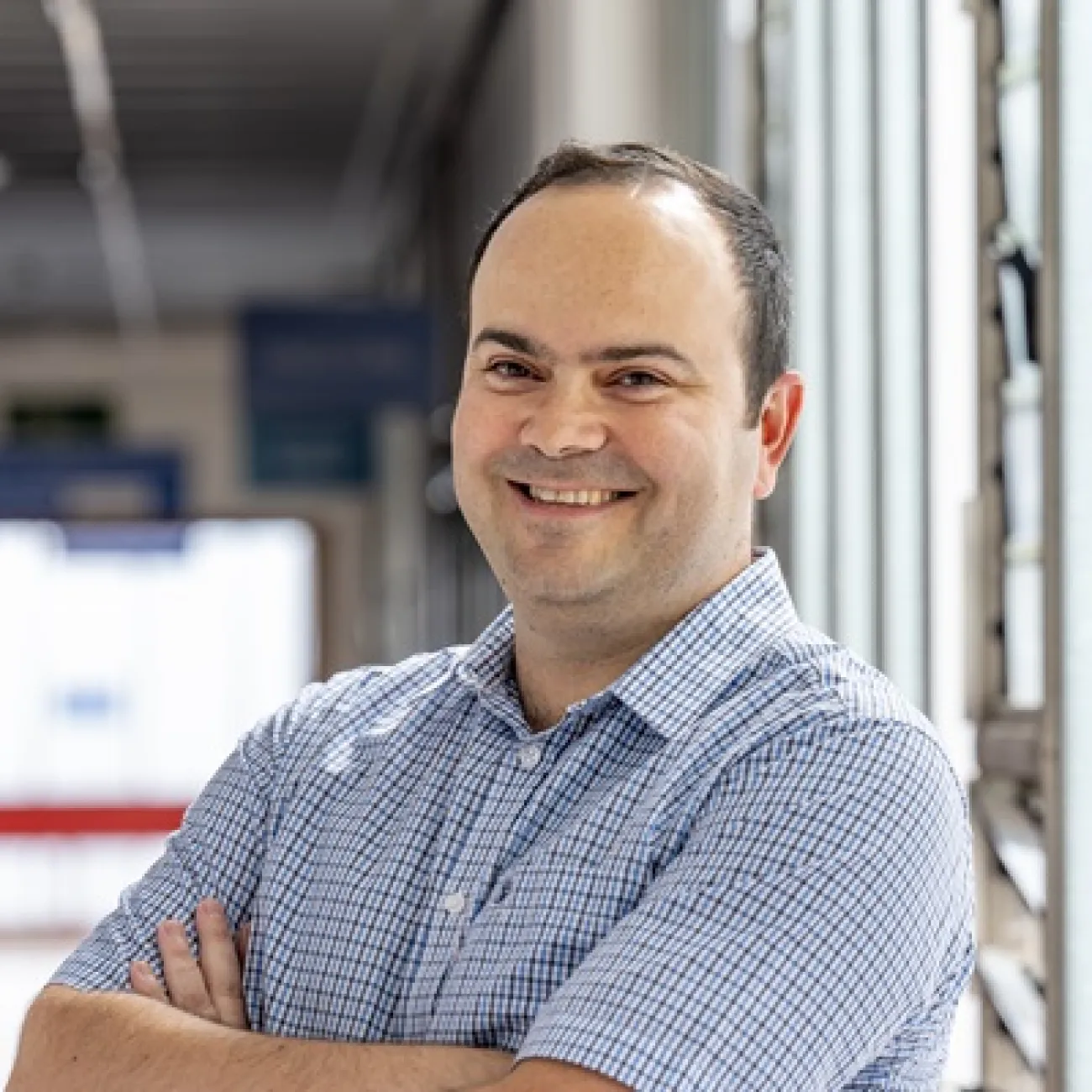
Professor Salah Mansour leads a multidisciplinary research programme in cellular immunology at the University of Southampton, focused on CD1-mediated immunity and unconventional T cells, including invariant natural killer T (iNKT) cells and γδ T cells. His research seeks to define how lipid antigens are recognised by the immune system and to harness these pathways for therapeutic benefit in cancer, infectious diseases and autoimmunity.
His laboratory integrates immunology, structural biology, and multiomics to uncover fundamental mechanisms of antigen presentation and T cell activation, while driving their translation into novel immunotherapies. A major focus is the development of next-generation cancer immunotherapies that harness CD1-restricted and innate-like T cell populations, with emerging programmes in cell therapy and precision immune modulation.
Professor Mansour’s research is supported by major national and translational funders, including the Medical Research Council (MRC), Cancer Research UK (CRUK), Blood Cancer UK, and translational investment from LifeArc and CRUK Horizons (C-Further), alongside support from HEFCE and the Institute for Life Sciences. He has established a strong network of interdisciplinary and translational collaborations spanning synthetic chemistry, structural biology, and clinical research, and works closely with partners at UKHSA Porton Down, King’s College London, the Francis Crick Institute, and the Africa Health Research Institute in Durban.
Through these activities, he is building an integrated programme that spans discovery science through to translational development, aligning with the University of Southampton’s Institute for Medical Innovation (IMI) strategy to accelerate the development of next-generation immunotherapies.
Research
Research groups
Research interests
- Unconventional T cells and lipid antigen recognition in human disease
- CD1-restricted T cell immunity, including group 1 CD1, iNKT and γδ T cells
- Molecular and structural mechanisms of CD1-mediated antigen presentation
- Translation of unconventional T cell biology into cancer immunotherapy
Research projects
Active projects
Completed projects
Publications
Teaching
Professor Mansour’s teaching spans undergraduate, postgraduate and doctoral education, with a strong focus on research-led teaching, assessment and programme development. He is Year 2 Assessment Lead for the BM4 Medicine programme, with responsibility for the design, delivery and quality assurance of written examinations, including main and supplementary papers, standard setting and liaison with external examiners. He previously served as Deputy Year Lead and contributes more broadly to assessment across the BM4 curriculum, including Evidence-Based Medicine and Patient Studies.
He has led the implementation of digital assessment approaches within BM4 Year 2, introducing structured blueprinting, moderation and post-examination analytics to improve transparency, consistency and feedback, while aligning assessment practice with General Medical Council standards.
At postgraduate level, he is School Lead for the Integrated PhD (iPhD) programme and Module Lead for the Infection and Immunity pathway (MEDI6038), overseeing module design, delivery and assessment and contributing to programme governance, quality assurance and cross-campus coordination. He also contributes to postgraduate teaching on the MSc in Cancer Immunology and Immunotherapy (MEDI6252) and the MSc in Biomedical Sciences by Research (MEDI6256), delivering specialist teaching in unconventional T-cell biology, antigen presentation and translational immunology.
Professor Mansour also teaches across programmes in Medicine and Biological Sciences, including NATS3006 (Drugs of the Future: Designing a Magic Bullet) and BIOL3013, delivering interdisciplinary teaching that integrates fundamental immunology with clinical and therapeutic applications.
He supervises research projects across PhD, iPhD, MSc and undergraduate programmes, including MSc laboratory projects, iPhD rotation placements and final-year undergraduate research projects. Through these activities, he integrates students into active research programmes and supports progression into academic and industry careers. He currently supervises three PhD students and has supervised seven doctoral students to completion.
He also serves as a Personal Academic Tutor for medical students and mentors early-career researchers within the University. His educational interests include assessment design, digital education, postgraduate training and the integration of students into translational research environments, alongside wider contributions to student recruitment, outreach and widening participation.