

Enis decided to move to a new career linked to the huge increase in undersea cabling for communications, power and offshore wind farms. At Southampton he’s gaining technical knowledge, practical experience and professional networks to help him make the switch.
A sought-after skill set
After doing a physics degree I worked for a major consulting firm. It was a good place to try out different projects and build skills early in my career, but after a few years I found I wanted something with more technical and scientific depth. I heard about offshore surveying and the growing demand for geophysicists in offshore industries. A lot of these roles required a geophysics master’s degree.
I chose to do mine at Southampton because of the opportunity get hands-on experience of specific geophysical techniques and equipment, as well as the academics’ impressive backgrounds. Also a lot of people currently in the industry did the degree here, so I thought it must point you in the right direction!
Surveying at sea
The survey trips on Callista, the University’s research vessel, have been a real highlight. They really help you to understand the kind of work you will be doing.
Enis, MSc Geophysics.
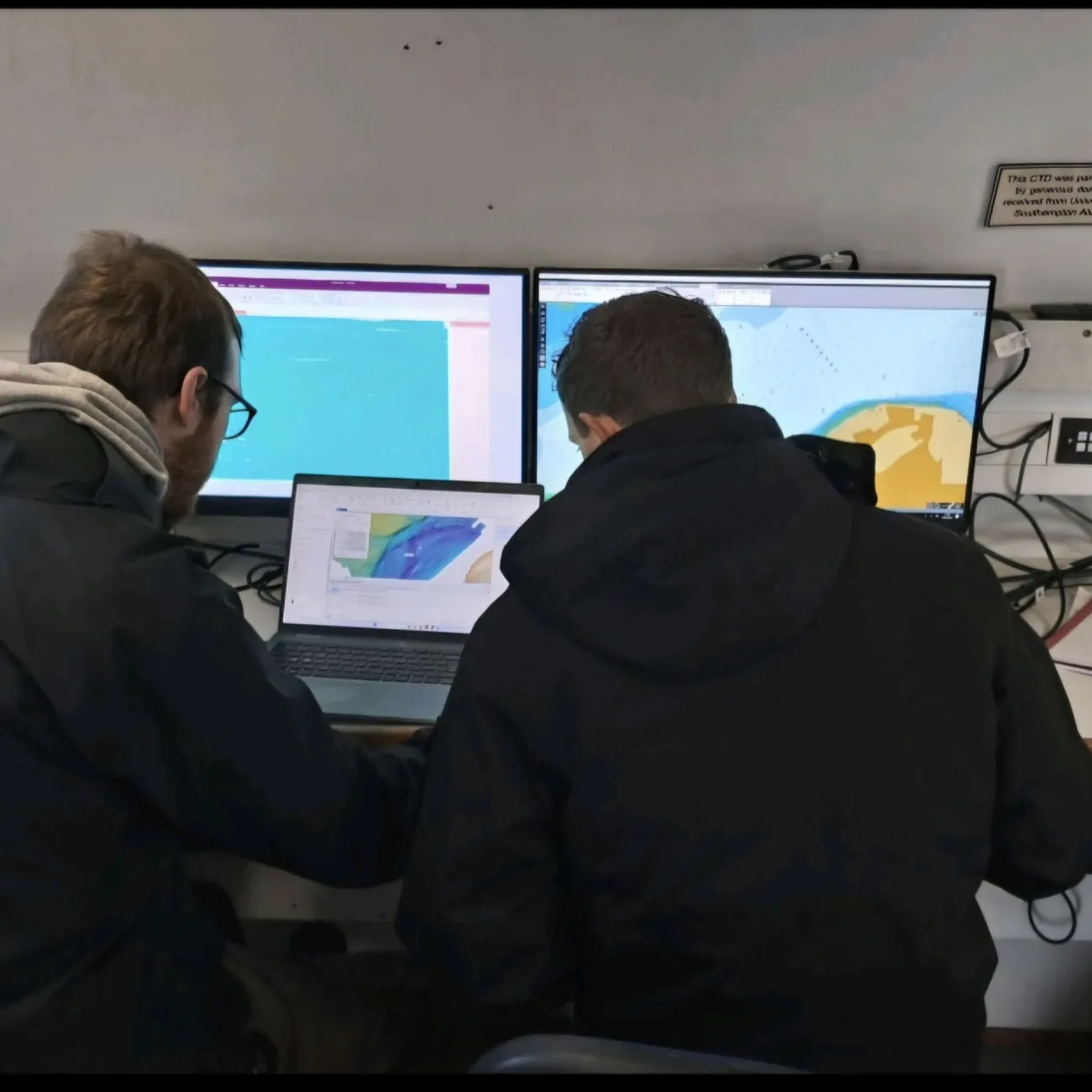
I went out on Callista four times, getting an overview of the whole process from deploying the equipment to recording the data and monitoring environmental conditions. We were tasked with ensuring the survey was going as closely as possible to the original plan, and making any necessary adjustments in coordination with the skipper depending on the conditions.
These trips help you to appreciate how much work goes into collecting offshore marine data and how the decisions you make during a survey impact the final results.
Bridging the knowledge gap
The academic support I’ve received has helped me bridge the gap between undergraduate physics and master’s study in geophysics. It’s a niche field so the number of students is quite small, which means you get a lot of one-to-one time with the lecturers. They are available whenever we need them and have been nothing but supportive.
Industry links and careers guidance
There is a constant connection with industry during the degree. In the first term we had industry talks every month, and conferences are advertised regularly in the department. For my dissertation project I’ll be working with a company and using industry data.
The extensive networks you gain are really valuable. For example, we have talks from former Southampton students who are now in geophysics roles, so we can get direct advice on the best approach when applying for jobs.
Enis, MSc Geophysics.
I highly recommend this master’s for people who want to gain skills rapidly in the field and build their networks. It’s intensive, but for me it’s well worth the hard work because it will get me where I want to be.