

About
Our group develops and applies advanced spectroscopy, spectrometry and diffraction methodologies in the fields of chemical, materials, biological sciences and medicine.
We have a track record for developing theory, methodology, hardware, and open-source simulation tools. We have also authored well-received textbooks.
Our spectroscopic methods include:
- femtosecond laser spectroscopy
- non-linear optical and Raman techniques
- Nuclear Magnetic Resonance (NMR)
- terahertz and infrared spectroscopies
- photoelectron spectroscopy
- inelastic neutron scattering
Imaging experiments are performed by Raman microscopy, non-linear spectroscopy and magnetic resonance imaging (MRI). This enables chemical distributions and molecular changes to be mapped in complex and living systems and has particular applications in therapeutics, health monitoring and diagnostics.
Research in the Centre for Magnetic Resonance develops nuclear hyperpolarisation techniques, to significantly enhance NMR and MRI signals.
Much of our research features in-situ/operando NMR at non-ambient temperature and pressure. We perform femtosecond time-resolved scattering and spectroscopy measurements, on photochemical processes. This is achieved using conventional lab-based laser sources and international, free electron laser facilities. These techniques are supported by advanced simulation and optimisation software and numerical analysis tools. These are often developed in-house and have been adopted by users worldwide.
We host the National Crystallography Service (NCS). The NCS are international leaders in applying X-ray and electron diffraction to highly challenging structural characterisation.
Advanced studies include:
- non-ambient and in-situ/operando single crystal and powder methods (temperature, pressure and controlled gas)
- quantum crystallography
- analysis of low-order materials, including liquids
- probing local structure
Modern separation science and mass spectrometry methodologies research includes developing and applying hyphenated approaches. These combine mass spectrometry with the following techniques:
- gas chromatography
- ultra-high-performance liquid chromatography
- ultra-high-performance supercritical fluid chromatography
These approaches tackle complex samples and matrices across various research areas including analytical science, energy and fuels (particularly oil-field chemistry), chemical biology, materials, synthetic organic chemistry and supramolecular chemistry.
Our methodological advances are leading to applications and commercial translation in materials, biology and medicine including developing new therapies, improving health monitoring and advancing diagnostics.
People, projects and publications
People
-

Doctor Nicola Knight
Principal Enterprise FellowEmail: N.Knight@soton.ac.uk -
Doctor Raymond Whorley
Research Software Engineer (PSDI)Email: R.P.Whorley@soton.ac.ukTel: +44 23 8059 6805 -
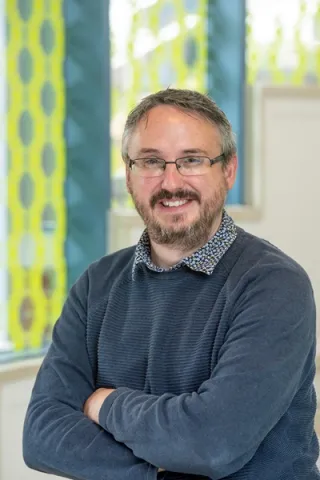
Professor Russell Minns
ProfessorPhotochemistry
Photoelectron Spectroscopy
Accepting applications from PhD studentsEmail: R.S.Minns@soton.ac.ukTel: +44 23 8059 3897 -

Doctor Sally Bloodworth
Senior Research Fellow (PSDI)Chemometrics
Applied Statistics
Meta-research
Email: S.Bloodworth@soton.ac.uk -
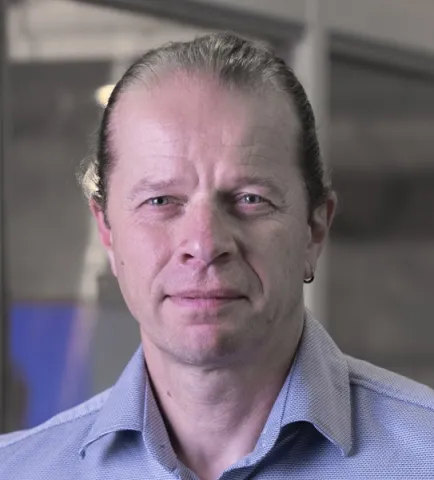
Professor Simon Coles
Professor of Structural ChemistryThe work we do is highly collaborative and multidisciplinary and can broadly be split i
Accepting applications from PhD studentsEmail: sjc5@soton.ac.ukTel: +44 23 8059 6721 -
Doctor Simon Lane
Senior Research FellowEmail: simon.lane@soton.ac.uk -
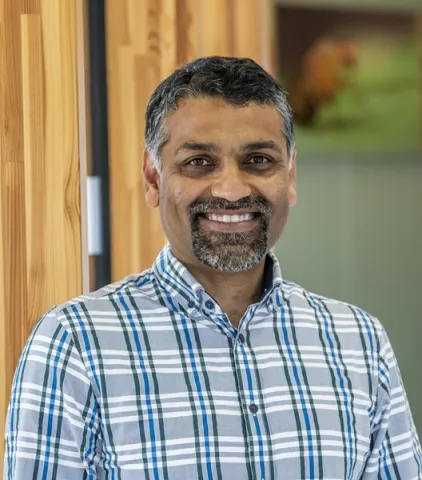
Professor Sumeet Mahajan
Professor of Molecular Biophotonics & ImagingNew chemical biology methods based on Raman spectroscopy and label-free imaging
Accepting applications from PhD studentsEmail: S.Mahajan@soton.ac.ukTel: +44 23 8059 3591
Our facilities
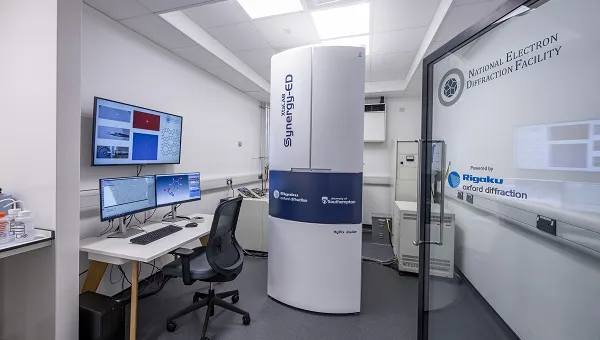
Electron diffraction facility
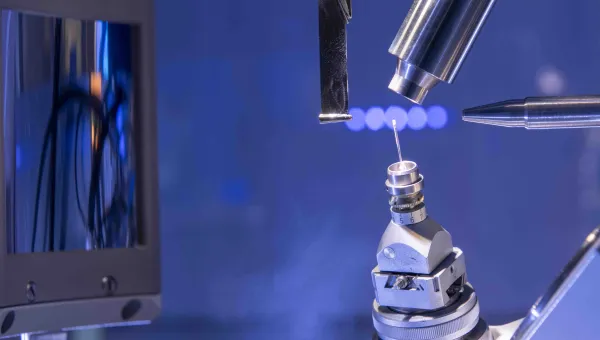
Single crystal X-ray diffraction facility
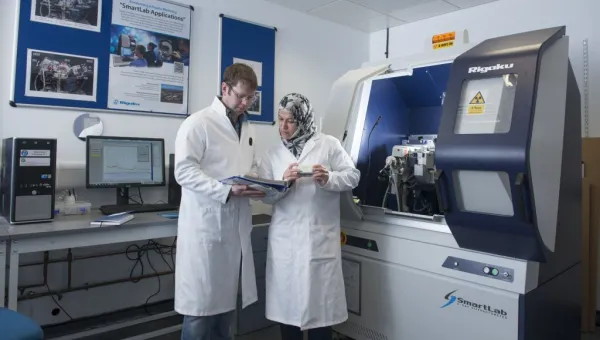
Powder and materials X-ray diffraction facility
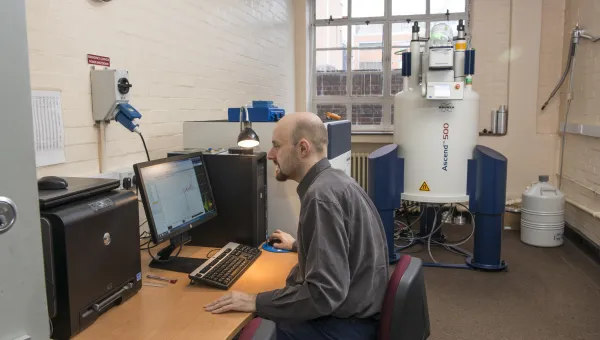
Nuclear magnetic resonance (NMR) spectroscopy facility
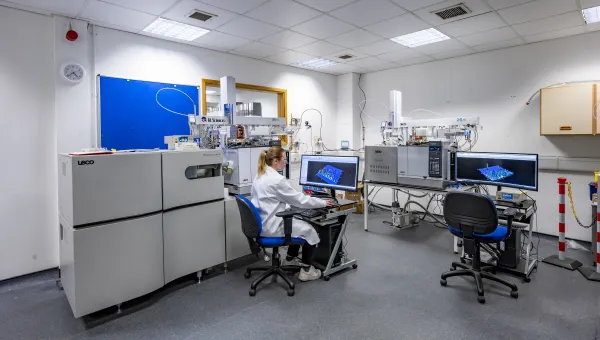
Chromatography and mass spectrometry facility

As a research technical professional in chromatography and mass spectrometry, I provide critical support in experimental design and data interpretation for colleagues in the School of Chemistry and Chemical Engineering

The group's research aims to push boundaries and is interdisciplinary, with applications across materials, environment and health. It also supports substantial knowledge exchange and enterprise activities through hosting national facilities and creating novel solutions
Related research institutes, centres and groups
-

Interdisciplinary Centre for Magnetic Resonance
Our main focus is finding ways to extend the timescale over which magnetic resonance can be made. -
Digital and Data-Driven Chemistry
We make leading contributions in wide-ranging applications that connect to other important themes in the School of Chemistry and Chemical Engineering, such as materials, catalysis, and health. -
Energy and Electrochemistry
We have a strong interest in the fundamentals of electrochemical science and technology including interactions with biological systems, cavitation, microelectrode techniques, new technique development and scanning methods. -
Sustainability and Materials
The Sustainability and Materials group uses emerging chemical technologies to address world challenges in catalysis, clean energy, carbon capture, and healthcare diagnostics. -
Organic and Biological Chemistry
We focus on the synthesis and discovery of novel compounds, the development of sustainable methodologies, and the application of organic chemistry to explore and manipulate biological systems.