

-

- Electronics and computer science
Agents, Interaction and Complexity
We research the science and engineering of complex systems. We focus on areas including human-machine teams and human-in-the-loop interaction.
-

- Music
AHRC Hub for Public Engagement with Music Research
Our Hub brings academics and non-academics together. We aim to connect music research to real world settings. This informs government policy to make a lasting impact on musical communities across the UK.
-
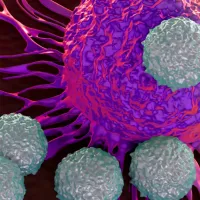
AI for the Life Sciences
Modern biology increasingly uses the generation and interpretation of large datasets to understand the complex processes that underpin life, health and disease. AI gives us tools and techniques to do this.
-
- Medicine
Antibody and Vaccine Group
We are a collaborative group of about 60 scientists and clinician scientists working to a common goal: how to harness the immune system to cure cancer.
-
- Biological sciences
- Engineering
- Health science
- Medicine
- Photonics and optoelectronics
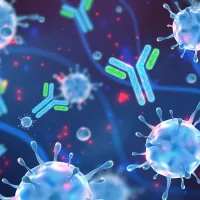
Antibody Drug Development
Our research focuses on understanding fundamental cellular processes in biological systems. This guides the design of therapeutics for cancer and autoimmune disease.
-
- Medicine
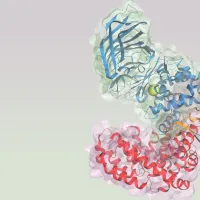
Antigen Processing and Presentation
We investigate how the immune system recognises and responds to cancer, enabling a mechanistic understanding for the development of new therapies for patients. -

- Economics
Applied Economics
The Applied Economics group produces innovative research that furthers and deepens our understanding of economic behaviour and global economic challenges, that informs and influences economic policy. -

- Mathematical sciences
Applied Mathematics and Theoretical Physics
We focus on mathematical modelling and mathematical physics, and investigate everything from neutron stars to superfluids.
-
- Engineering
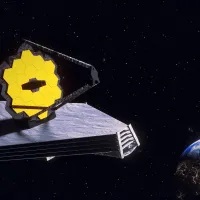
Astronautics Group
Our group covers a wide range of fundamental and applied research in space physics and spacecraft engineering. -

- Physics and astronomy
Astronomy Group
We study space and cosmic phenomena above the Earth’s atmosphere. We use observations of the heavens to better comprehend our place in the Solar system, to improve our understanding of the origin and growth of galaxies, extreme objects such as black holes, and the universe itself.